- May 14 2026
- admin
The process of rented property management in the year 2026 has become more difficult for landlords who operate in the United Kingdom. The property ownership process undergoes transformation because of increased expenses and more rigorous laws and rising tenant demands.
Many landlords are now asking a simple question: is property management still worth it? The answer depends on how efficiently properties are managed. The use of proper systems enables property management to deliver four benefits which include time savings and stress reduction and improved tenant satisfaction and increased long-term financial gains. Unstructured environments create challenges which lead to overwhelming situations and make it hard to maintain control.
Property management worth it 2026 for UK landlords: key insights
Here are seven important things UK landlords should know in 2026.
1. Time is the most limited resource
Property management requires more than rent collection because it requires maintenance work and tenant communication and inspection processes and legal document handling and financial record management.
The primary challenge faced by landowners in 2026 is about time management. Landlords need to spend multiple hours every week to handle their properties. The absence of effective systems leads to task distribution problems which increase work difficulties and result in time delays and errors that harm both efficiency and tenant contentment.
2. Tenant expectations continue to rise
Modern tenants demand immediate responses which should continue throughout their entire time as tenants. The combination of delayed updates with unclear procedures results in tenant dissatisfaction which increases tenant turnover rates.
Effective property management focuses on:
- fast communication
- clear maintenance updates
- simple rent processes
- transparent information
The landlords can establish stronger tenant relationships through this practice which will help them maintain tenants for extended periods. The method will help landlords reduce their vacancy risk because it strengthens their tenant relationships.
3. Maintenance needs structured tracking
Maintenance works as the essential property management function and its execution needs to be prioritized across all property management activities. The minor maintenance issues, when left unattended, develop into expensive repair needs which demand urgent attention.
In 2026, landlords benefit from structured tracking systems that allow them to:
- record maintenance requests
- monitor repair progress
- manage contractors
- store service history
Repair work faces greater delays which lead to higher expenses and decreased property value during extended periods of time when proper tracking systems do not exist. The problem affects older rental buildings which experience regular physical damage because their repair work requires proper tracking to function correctly.
4. Compliance requirements are increasing
UK landlords face increasing legal duties which they must fulfill. The entire process requires landlords to handle safety inspections and manage their rental agreements and protect tenants’ security deposits and handle all necessary documentation.
Missing even small compliance steps can result in penalties or legal issues. Because of this, organization has become essential for successful property management instead of being an optional extra. Maintaining compliance safeguards both revenue streams and company reputation.
5. Multi-property management is more complex
Self-managing a single property may still be manageable, but handling multiple properties brings about major difficulties because no organizational system exists to assist with property management.
Tasks multiply quickly, including:
- rent tracking
- tenant onboarding
- maintenance coordination
- financial reporting
As portfolios grow, manual methods become less reliable. Some landlords face problems like relatively reduced convenience for increased size in their real property portfolio.
6. Organization directly impacts profitability
Property management work involves more than administrative tasks because it directly impacts revenue generation and future profit potential. The organization system of a business determines its ability to process payments and conduct maintenance work as well as its effect on tenant satisfaction and the rate at which tenants leave the property. The business problems which currently exist in the organization result in major reductions to total profit margins.
Landlords use organized systems to achieve better financial visibility which enables them to decrease unneeded expenses while preserving their rental revenue streams. The financial benefits that businesses receive from their operations show how even minor efficiency upgrades can lead to major yearly revenue and cash flow improvements.
7. Technology is now essential in 2026
Digital tools have become standard components in property management operations. Landlords who continue using manual methods often find it harder to stay competitive in a fast-moving rental market.
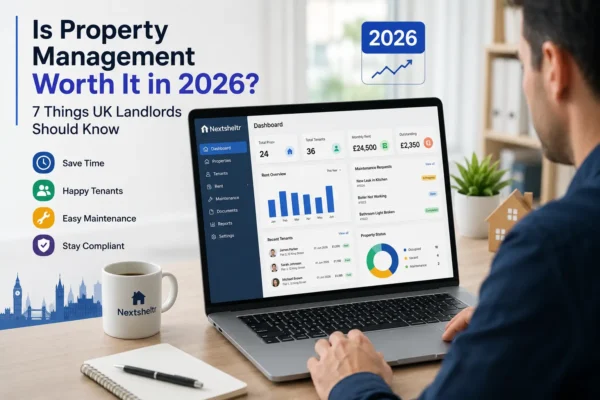
The software Nextsheltr provides modern systems which enable users to manage essential operations through centralized access to tenant records and rent tracking and maintenance management and property data. The process results in decreased manual work because it increases precise results and better operational management.
In 2026, technology is no longer optional for serious landlords. It has become a core part of running an efficient rental business in the UK.
Is property management worth it in 2026? Yes, it would only be worthwhile if done systematically and efficiently. The rental market requires improved solutions because the manual methods of operation fail to meet present-day needs. UK landlords need better systems to manage time, communication, compliance, and maintenance effectively.
Property management functions as a growth mechanism instead of a stress-inducing mechanism when it receives proper management. The system enables landlords to maintain control over their properties while establishing better connections with tenants and safeguarding their future earnings through market shifts.
Frequently Asked Questions
Yes, property management is worth it in 2026 for most UK landlords. It saves time, improves tenant satisfaction, ensures legal compliance, and helps increase long-term rental profitability when managed efficiently.
Property management software helps landlords automate rent tracking, manage maintenance requests, store documents, and improve communication with tenants, reducing manual workload and errors.
Yes, but it becomes difficult as the portfolio grows. Manual management often leads to missed payments, delayed maintenance, and poor organisation, especially for multiple properties.
Nextsheltr helps landlords manage properties in one place by simplifying rent tracking, tenant communication, maintenance management, and property records in a single digital platform.
Yes, even small portfolios benefit from property management because it improves organisation, reduces stress, and ensures better tenant relationships from the beginning.